#191 How to Write Ads like Claude Hopkins
What I learned from reading “My Life in Advertising and Scientific Advertising” by Claude C. Hopkins.

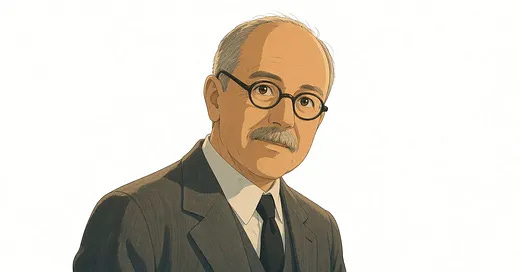
Today’s Chapter is based on the book “My Life in Advertising and Scientific Advertising” by Claude C. Hopkins.
Claude C. Hopkins was an American advertising executive and pioneering copywriter who helped transform advertising into a measurable, results-driven discipline. Best known for campaigns for Schlitz beer and Pepsodent, he advocated testing advertisements, tracking coupon responses, and using factual “reason-why” copy.
Here’s what I learned:
Hard Work
“There may be people smarter than me, but no one is ever going to work harder than me.”
— Jensen Huang
Claude Hopkins’ work philosophy is a huge part of the reason why he was so successful in advertising. He genuinely believed that the primary difference between success and failure isn’t based on intelligence but on sheer hard work. In fact, he understood that in a field as competitive as advertising, the person willing to put in twice the hours would inevitably learn twice as much and go twice as far.
This conviction of his was shaped at a young age as he was deeply influenced by his Scottish Mother who instilled in him a work ethic that was irreproachable. From the age of nine he supported himself by cleaning schoolhouses, delivering newspapers, and performing other chores before and after classes. That pattern continued into adulthood, where he treated evenings and Sundays as working hours, and was often at his desk until two in the morning. He calculated that by ordinary standards he had lived two years for every calendar year, accumulating the equivalent of seventy years of advertising experience in thirty-five. The cumulative effect was decisive.
“But the man who works twice as long as his fellows is bound to go twice as far, especially in advertising. One cannot get around that. There is some difference in brains, of course, but it is not so important as the difference in industry. The man who does two or three times the work of another learns two or three times as much. He makes more mistakes and more successes, and he learns from both. If I have gone higher than others in advertising, or done more, the fact is not due to exceptional ability, but to exceptional hours.”
— Claude C. Hopkins
Hopkins explains that the main reason why he was able to work harder than others in advertising is because this was his passion. As a matter of fact, viewing work not as a chore but as an engaging game is the key to sustainable high performance. As he explains, “All the difference lay in a different idea of fun. I came to love work as other men love golf. I love it still. Many a time I beg off from a bridge game, a dinner, or a dance to spend the evening in my office. I steal away from week-end parties at my country home to enjoy a few hours at my typewriter. So the love of work can be cultivated, just like the love of play. The terms are interchangeable. What others call work I call play, and vice versa. We do best what we like best.”
In terms of advertising, this profound lesson is even more important. According to Hopkins, advertising is a form of research, where every campaign was an experiment and every failure a lesson learned at a low cost. The more you study, the better of an advertiser you will become through experimentation. As he mentions, “Any man who by a lifetime of excessive application learns more about anything than others owes a statement to successors. The results of research should be recorded. Every pioneer should blaze his trail. That is all I have tried to do.”
This reminds me of David Ogilvy who was a big fan of Claude Hopkins. He once said, “Nobody should be allowed to have anything to do with advertising until he has read this book (Scientific Advertising by Claude C. Hopkins) seven times” As such, similarly to Hopkins, Ogilvy believes that his success in advertising is due to the fact that he looks at the creative function through the eyes of a researcher. In fact, he believes that one must know everything about the product he wishes to advertise. He once said that the “Quality of salesmanship involves energy, time and knowledge of the product.”
Here’s a humorous step-by-step guide on how Ogilvy wrote advertisements as a copywriter, in his own words:
I have never written an advertisement in the office. Too many interruptions. I do all my writing at home.
I spend a long time studying the precedents. I look at every advertisement which has appeared for competing products during the past 20 years. I am helpless without research material–and the more “motivational” the better.
I write out a definition of the problem and a statement of the purpose which I wish the campaign to achieve.
Before actually writing the copy, I write down every conceivable fact and selling idea. Then I get them organized and relate them to research and the copy platform.
Then I write the headline. As a matter of fact I try to write 20 alternative headlines for every advertisement. And I never select the final headline without asking the opinions of other people in the agency.
At this point I can no longer postpone doing the actual copy. So I go home and sit down at my desk. I find myself entirely without ideas. I get bad-tempered. If my wife comes into the room I growl at her.
I am terrified of producing a lousy advertisement. This causes me to throw away the first 20 attempts.
If all else fails, I drink half a bottle of rum and play a Handel oratorio on the gramophone. This generally produces an uncontrollable gush of copy.
Next morning I get up early and edit the gush.
Then I take the train to New York and my secretary types a draft. (I cannot type, which is very inconvenient.)
I am a lousy copywriter, but I am a good editor. So I go to work editing my own draft. After four or five editings, it looks good enough to show to the client. If the client changes the copy, I get angry–because I took a lot of trouble writing it, and what I wrote I wrote on purpose.
Offer A Service
“Do unto others knowing that something will be done unto you.”
— The Golden Rule
Claude Hopkins argues in his book that most companies mistakenly try to sell too hard on their brand or their product which throws off potential customers. Instead, he learned early that goods sell themselves when any risk is removed from the buyer and when sellers’ apparent purpose is to help rather than to profit.
For example, when he first tried advertising for Cotosuet in Boston, he succeeded in selling more Cotosuet in one week than six salesmen had sold in six weeks. When his boss asked him how he did it, he said, “I did not sell Cotosuet, did not talk Cotosuet. I sold pie cards and schemes, and Cotosuet went with them.” He explains that the difference is in the concept of selling, he writes, “The average salesman openly seeks favors, seeks profit for himself. His plea is, “Buy my goods, not the other fellow’s.” He makes a selfish appeal to selfish people, and of course he meets resistance. I was selling service. The whole basis of my talk was to help the baker get more business. The advantage to myself was covered up in my efforts to please him. I have always applied that same principle to advertising. I never ask people to buy.”
As such, Hopkins argues that you should never cry a brand name or urge customers to prefer your brand over another. He explains that most advertising money is wasted not because the product is bad, but because the message is about the seller and not the buyer. Hopkins argues that if you make your advertising appealing to the potential customer (i.e. their health, their beauty, their convenience), you align your interests with theirs, making the sale a more natural consequence. Therefore, the best advertising doesn’t look like advertising at all.
“The greatest two faults in advertising lie in boasts and in selfishness. The natural instinct of a successful man is to tell what he has accomplished. He may do that to a dinner partner who cannot get away. But he cannot do that in print. Nor can he put over, at a reasonable cost, any selfish undertaking. People will listen if you talk service to them. They will turn their backs, and always, when you seek to impress an advantage for yourself. This is important. I believe that nine-tenths of the money spent in advertising is lost because of selfish purposes blazonly presented.”
— Claude C. Hopkins
Instead, Hopkins argues that you need to create an offer so reasonable that refusal feels foolish. This is the only way for your advertising to feel like a favour is given to the customers. This is also the reason why giving out free samples is such a great way to earn new customers. Instead of urging people to buy, through samples, Hopkins urged them to try, to test, to prove the product’s worth at no risk to themselves. This is the reason why his ads for Liquozone, Palmolive, and Pepsodent offered free samples or money-back guarantees so that the potential customers could test products at the advertiser’s expense. What he also found out was that people were genuinely fair, and if you offered them to try products for free and to only pay when they are satisfied with it or to return it if not, few people abused the system.
For example, Hopkins writes, ““My ads. said in effect, ‘Try this cough remedy; watch the benefits it brings. It cannot harm, for no opiates are in it. If it succeeds, the cough will stop. If it fails, it is free. Your own druggist signs the warrant.’ The appeal was overwhelming, almost resistless. Ever since then my chief study has been to create appeals like that. When we make an offer one cannot reasonably refuse, it is pretty sure to gain acceptance. And however generous the offer, however open to imposition, experience proves that very few will cheat those who offer a square deal.“
This reminds me of Estee Lauder who was a master at implementing Robert Cialdini’s principle of reciprocity through her sales and marketing ideas. Cialdini, a social psychologist who is widely known for his studies on the principles of persuasion, identified several key principles, and one of them is the power of reciprocity. According to Cialdini, humans are hardwired to give back to others the form of behavior they have received. In other words, when someone does something nice for us, we feel an obligation to do something nice in return.
This principle has been applied in various fields, including sales & marketing and notably by Estee Lauder who was one of the pioneers in implementing the power of reciprocity in marketing in the beauty industry. She gave free samples of her products to customers, which not only allowed them to try Estee Lauder’s products but also created a sense of obligation to buy the products in return for the free samples. This approach proved to be very successful and has since become a common practice in the beauty industry.
Another example of a company using free sampling as advertisement is Price Club which was one of the first companies to start in-store food sampling. In fact, it was initially used as a way to educate members about new in-store food products. While, some members of Price Club took advantage of this and would eat samples as a free lunch, it is clear that sampling increased sales both because members liked the products, and because of the psychology behind the “reciprocity rule”, the subconscious desire to reciprocate when receiving something for free.
Understand Human Nature
“We see people not as they are, but as they appear to us. And these appearances are usually misleading.”
— Robert Greene
Claude Hopkins definitely studied advertising with scientific rigour, but he also understood the importance of understanding human behaviour as an essential trait for effective persuasion as an advertiser. Notably, Hopkins recognizes that basic human nature remains constant across eras. As such, advertisers can build successful ads campaigns if they align with underlying psychological drivers such as curiosity, social proof, positivity over negativity and using specific facts over generic ones.
For example, on curiosity, Claude Hopkins argues that it is one of strongest human incentives. He writes, “Curiosity is a strong factor in human nature, and especially with women. Describe a gift, and some will decide that they want it, more will decide that they don’t. But everybody wants a secret gift. There are things to consider in such an offer. The gift must not be disappointing. It should be somewhat better than women are led to expect.”
“Human nature is perpetual. In most respects it is the same today as in the time of Caesar. So the principles of psychology are fixed and enduring. You will never need to unlearn what you learn about them. We learn, for instance, that curiosity is one of the strongest of human incentives.”
— Claude C. Hopkins
As for social proof, Hopkins recognized that people often lack the expertise or confidence to make independent decisions. In these situation they tend to look to others for guidance. Therefore, by showcasing the popularity of a product, advertisers can create a powerful demand due to human nature. He explains that, “People are like sheep. They cannot judge values, nor can you and I. We judge things largely by others’ impressions, by popular favor. We go with the crowd. So the most effective thing I have ever found in advertising is the trend of the crowd. That is a factor not to be overlooked. People follow styles and preferences. We rarely decide for ourselves, because we don’t know the facts. But when we see the crowds taking any certain direction, we are much inclined to go with them.”
Furthermore, Hopkins warns on using negative advertising to attract potential customers. He mentions that scaring people or highlighting undesirable outcomes typically causes people to turn away. Instead, advertising should provide positive and attractive solutions that show path to beauty, cheer, health and success. He writes, “Compare the results of two ads, one negative, one positive. One presenting the dark side, one the bright side. One warning, the other inviting. You will be surprised. You will find that the positive ad outpulls the other four to one, if you have our experience. The ‘Before and after taking’ ads are follies of the past. They never had a place save with the afflicted. Never let their memory lead you to picture the gloomy side of things.”
Finally, Hopkins argues against using vague and generic claims like “Best in the world” in advertisements. He mentions that these claims are meaningless and often counterproductive because they cause skepticism. In contrast, if we can use specific facts such as actual figures or facts, people tend to believe it as they do not expect us to lie.
He reiterates that “To say, “Best in the world,” “Cheapest in the long run,” “The most economical,” etc., does not create conviction. Such claims are expected. The most carefully censored magazines accept them as merely expressions of a salesman trying to put his best foot forward. They are not classed as falsehoods, but as mere exaggerations. They probably do more harm than good, because they indicate a looseness of expression and cause people to discount whatever you say. But when we make specific and definite claims, when we state actual figures or facts, we indicate weighed and measured expressions. We are telling either the truth or a lie. People do not expect big concerns to lie. They know that we cannot lie in the best mediums. So we get full credit for those claims. I shall have other occasions to cite the advantages of definite, specific claims.”
“The competent advertising man must understand psychology. The more he knows about it the better.”
— Claude C. Hopkins
Once again, this is a reminder on the importance of understanding human psychology. Charlie Munger was also an avid believer of this, especially when it came to decision-making. This is, in my opinion, a perfect moment to review Charlie Munger’s legendary speech on the psychology of human misjudgment:
Beyond the Book
Listen to "#430 How to Write Ads That Sell" by Founders Podcast
Read "Reciprocity: Getting What You Give" by Farnam Street
If you are interested in having conversations with the eminent dead, consider trying my AI Chatbox prompted with highlights from over 100+ biographies I have read. Try it here.
If you enjoy reading my newsletter, please consider becoming a paid subscriber. You’ll be able to keep this newsletter going! Here’s what you get when you upgrade:
Voting on polls: you’ll get to vote on who I should write about next.
Requesting biographies: you can request a biography for me to read and write about next.
Supporting my next book purchase: all payments received will be used to purchase a new biography.
Discussion about this post