#193 How Daniel Ek Won the Race for Audio Dominance
What I learned from reading “The Spotify Play: How Daniel Ek Beat Apple, Google, and Amazon in the Race for Audio Dominance” by Sven Carlsson.

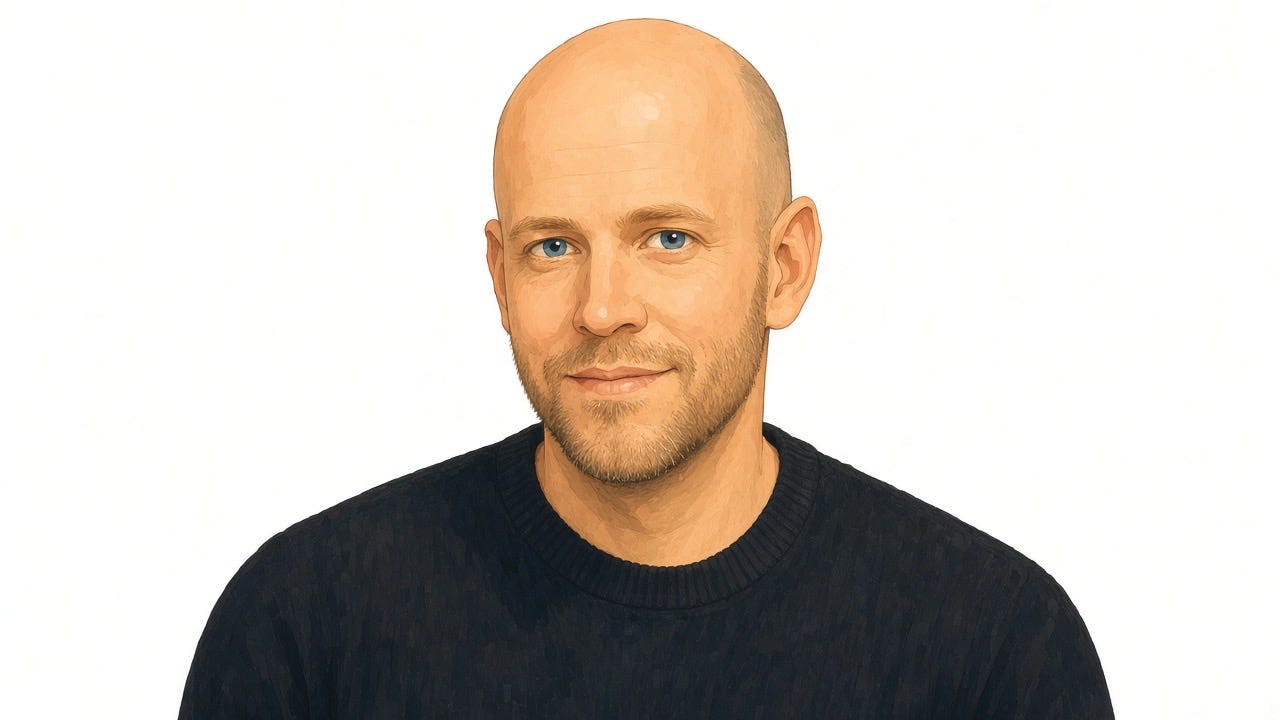
Today’s Chapter is based on the book “The Spotify Play: How Daniel Ek Beat Apple, Google, and Amazon in the Race for Audio Dominance” by Sven Carlsson.
Daniel Ek is a Swedish entrepreneur and technologist best known for co-founding Spotify with Martin Lorentzon in 2006. As Spotify’s former CEO and current executive chairman, he helped transform music streaming by offering a legal, convenient alternative to piracy through free ad-supported and paid subscription services.
Here’s what I learned:
Unwavering Commitment
“Commitment is what transforms a promise into reality.”
— Abraham Lincoln
One of the reason why Daniel Ek was able to succeed at Spotify was due to his refusal to abandon the freemium approach even when almost everyone in the industry thought it was suicidal. He understood from the beginning of Spotify that the only way to displace piracy was to offer something better while still giving users a frictionless entry point.
When Ek was asked to name the single most important reason for his company’s success, he responded with, “I’ll give you two reasons. First of all, we were committed to the freemium business model when no one else was. This was very controversial. Second, we started in Sweden, proved our model, opened up in more European countries, and grew organically one country at a time. That’s what finally made the music industry realize that our model was the future.”
As a matter of fact, Daniel and his co-founder Martin Lorentzon had difficulty obtaining music licensing from the big music labels that hated giving away music for free. As such, they were forced to not chase global scale immediately. This ended up as a positive as they were able to treat Sweden as a laboratory for testing and, once the product worked and conversion data began to appear, they were able to sign bigger licensing deals and expand to additional European markets, and later on, the United States.
“The Spotify Play is a story of how strong convictions, unrelenting will, and big dreams can help small players take on tech titans and change an industry forever.”
— Sven Carlsson
Even the company was running out of money, EK continued to defend the freemium business model as the essential growth engine. He knew that this was the main differentiator between Spotify and other music subscription services. The freemium structure was therefore non-negotiable. This was especially true considering Daniel Ek started Spotify not to compete with other legal music streaming services, but to build a legal alternative to fight piracy. As Carlsson writes, “Over tapas and red wine, Daniel and Martin Lorentzon explained that they wanted to create a legal, torrent- based platform for the distribution of music, and possibly video. The service would be ad- funded but free to use, they explained, because that was the only way to fight piracy.”
While Spotify ended up with a freemium model instead of a completely free platform, Ek’s insistence in keeping part of the product free was important in allowing Spotify to grow its users base.
“At Spotify, the engineers viewed the bittorrent world not as enemies, but as competitors. Daniel would often declare that they needed to build a product experience that was stronger than downloading music files of mixed quality off the web. Spotify needed to offer all the world’s music in a manner that was easy, legal, and free to the user. The company’s revenue would come from advertising and be shared with the record companies and music publishers.”
— Sven Carlsson
This reminds me of Jim Weber’s Journey at Brooks Running and in the importance of knowing your moat. When Weber took over as CEO in 2001, Brooks was struggling to compete with industry giants like Nike and Adidas. The company was spread too thin, trying to cater to too many categories. Weber made a bold decision: Brooks would focus solely on performance running. This pivot became the foundation of its success.
Weber’s philosophy was clear: you don’t have to be everything to everyone. Instead, you can dominate a smaller, more focused market. Brooks narrowed its focus to performance running, developing products that catered specifically to serious runners. This decision was a game-changer. As he explained, “Going forward, I told them, we would pivot to a running-only brand. Real performance for real runners. Our product would perform for the most discerning runners, earning their trust mile after mile, and our brand would embody the spirit and soul of all who run.”
“In footwear, many believe the conventional wisdom that says brands must play in all categories, across myriad price points. They believe that a company can’t survive by playing a narrow game. Our contrarian philosophy was to focus only on premium running, turning a narrow focus into a strength.”
— Jim Weber
Weber was inspired by Warren Buffett’s investment philosophy, particularly Buffett’s emphasis on building moats around businesses, as a matter of fact, the concept of a “moat” was central to his strategy. A moat, in business terms, refers to a company’s ability to maintain a competitive advantage over its rivals. Weber explains that “In business, a moat leverages the medieval castle metaphor, describing a business’s competitive advantages that allow it to successfully grow and defend its position with customers profitably against any would-be competitor.”
Weber believed that, “If you are entering a new business with serious competition, you need to prioritize solving for your moat.” For Brooks, the moat problem was solved once they focused on delivering premium products for performance running only. Weber’s decision to focus on a niche market also allowed Brooks to create a distinctive brand identity. Rather than trying to compete with larger, more diversified brands, Brooks leaned toward areas where competitors weren’t focusing on in order to create a brand that stood out in the croweded sportswear market.
“The goal for a brand is not to emulate the competition but to find unaddressed opportunity in between the strengths that your competitors already own.”
— Jim Weber
This focus on a niche not only helped Brooks survive but thrive. By 2010, Brooks had become the fastest-growing brand in running, surpassing Asics in market share in the specialty run channel. As Weber reflects, “I was convinced that Brooks’s opportunity in premium performance run was big. Plus, our Run Happy positioning was novel and unique. Given the size of the category, we had a billion-dollar idea.”

Obsessing Over Details
“Details matter, it’s worth waiting to get it right.”
— Steve Jobs
As Spotify’s competitors was piracy, Daniel Ek understood that product obsession was a necessity. He knew that for Spotify to be better than piracy, the user experience must feel magical, and that this had to be done by focusing on the details. In fact, the early engineers at Spotify were given a standard that was considered unrealistic. As Carlssen mentions, “From the start, Daniel Ek knew what he expected of his CTO, Andreas Ehn. Spotify’s client needed to be quick and nimble. There was no room for the types of glitches often found in other media players on the market. The music needed to flow like water from a faucet. Delays due to buffering would not be tolerated at Spotify. It’s “not cool to have to wait,” as an early version of the Spotify.com website put it.”
As a matter of fact, back in the days, piracy had one huge downside: you had to wait for minutes before you could play a song and you would often end up downloading the wrong song or even worse with a virus. Therefore, Daniel Ek built an engineering culture around latency at Spotify. Speed wasn’t just a nice feature, it was the product’s reason of existence. With Spotify, users would be able to play music instantly without even needing it to load.
“Daniel Ek had insisted that users should be able to find a song instantly and play it without delay. Soon, all the technical discussions revolved around latency, which had a number: 200 milliseconds. Fredrik Niemela had read that if a song started playing within 0.2 seconds of a button being pushed, people would experience it as immediate. The bandwidth in Sweden’s broadband networks was already good enough for songs to load faster than they were being played. So, in theory, it should be possible to start playing a song while it was still loading.”
— Sven Carlsson
Daniel Ek’s commitment to obsessing over the user experience wasn’t only about speed. He wanted his product to create a new relationship between users and music. Spotify’s client introduced search, playlists, artists pages, etc. Carlsson writes, “Spotify’s beta users could search for music and create playlists. There were separate pages for artists and albums, and links between the two. And, most importantly, the music began streaming immediately. It felt like pressing play on a locally stored file in iTunes. In the Spotify client, encrypted files were temporarily saved in the cache memory on the user’s computer. The decryption key wasn’t saved on the hard disk, but in the cloud. Users gained access to the music, but they didn’t own it. The age of music streaming was born.”
Furthermore, Spotify’s next leap that truly made it special was its ability to provide recommendations to its users. Once it presented the Spotify Discovery Weekly playlists to the world, within ten weeks, they had generated a billion individual streams, and the company finally surpassed competitors like Pandora in active users.
“Everyone who tried it found the experience magical. The engineers could hardly believe what they had accomplished in just a few months. Spotify’s client was better than anything else on the current market. “It was rocket science, for real,” an early admirer would express.”
— Sven Carlsson
Funnily enough, Daniel Ek’s main competitor at Spotify was iTunes from Apple, whose founder, Steve Jobs, was also obsessed with user experience. In fact, Jobs built his first computer with Steve Wozniak because they wanted one and couldn’t afford one. That’s how they started Apple Computers from scratch. As Jobs writes, “The reason we [Wozniak and I] built a computer was that we wanted one, and we couldn’t afford to buy one. They were thousands of dollars at that time. We were just two teenagers. We started trying to build them and scrounging parts around Silicon Valley where we could. After a few attempts, we managed to put together something that was the Apple I.”
As such, Jobs built Apple with one principle in mind: to build products that they would want to use themselves. Similarly, this is how the iPhone got to be created; it was driven by the fact that they all hated their phones and wanted to build a phone that they could use. Jobs mentions that “we started doing this [was] we could see that we were getting better and better at iPods, and we could see that there was an opportunity to maybe do the next thing—and what should it be? And it wasn’t driven by a bunch of market research or financial spreadsheets about how big certain markets were. It wasn’t driven by that at all. It was driven by the fact that we all hated our phones. We talked to all of our friends and all the people we knew, and they all hated their phones. And we thought, “This is a really important device, and everybody hates it. They don’t know how to use even 10 percent of the features that are on these phones!””
“Steve gave a speech once, which is one of my favorites, where he talked about, in a certain sense, “We build the products that we want to use ourselves.” And so he’s really pursued that with incredible taste and elegance that has had a huge impact on the industry.“
— Bill Gates

Changing Your Mind
“Those who never change their minds, never change anything.”
— Winston Churchill
Despite Daniel Ek’s being hard and insisting in keeping the freemium model at Spotify, he was surprisingly quite flexible and never afraid of changing his mind. One of his best quality as a leader was his ability to keep absorbing lessons from colleagues, competitors and advisers and to change when facing different circumstances.
Even from a young age, Daniel Ek’s path to success was clear to himself and those around him. A close friend who watched Daniel Ek work once said, “This guy is either going to be really successful—or die trying.” In fact, at age eleven, Daniel was already imagining a career in technology and was telling people that he was going to be bigger than Bill Gates!
That being said, even if Ek was a technically gifted young entrepreneur, his success at Spotify was also due to the fact that he was able to surround himself with exceptional talents like Martin Lorentzon and talented engineers such as Ludvig Strigeus.
“Perhaps Daniel’s greatest professional achievement was that he never stopped learning from the people he surrounded himself with. He had come to embody the traits of countless associates and former coworkers. Martin Lorentzon had taught him how to keep the faith and stay the course; his friend Shakil Khan how to navigate social situations. His many lawyers and negotiators had helped him weed his way through the music industry, while Mark Zuckerberg had shown him how to think big and bold.”
— Sven Carlsson
Normally, those that surround themselves with exceptional talents are those that also have the ability to listen to ideas from people around them. Daniel Ek’s path was no exception. He was never afraid of letting evidence challenge his preferences. As mentioned above, Spotify’s Discovery Weekly Playlist was a huge hit, as it recommended songs to be played next to its users. However, Daniel Ek was opposed to it initially. As Carlsson explains, “This was a clear departure from Daniel’s original vision in which users were assumed to be actively searching for music, building playlists, and sharing them with others. At times, he seemed surprisingly reluctant to let that version go. ‘We should never tell anyone what to listen to,’ Daniel told one of his colleagues as late as 2010. Soon he would be singing a different tune.”
Similarly, after listening to advisors, he was forced to switch Spotify’s business model from a completely ad-funded free platform to a freemium model. While Ek’s original vision was valuable because it clarified what Spotify was for, he was not afraid to modify it when it was clear that it became limiting as it prevented the company to reach licensing deals to music that people actually wanted to listen.
Finally, another great example of his ability to change his mind is when Daniel Ek’s made Spotify go public in 2017. While he dreaded it, he understood that an IPO was the only way he could provide a lucrative exit for his early investors while he could retain control over his company.
This constant need of being adaptable to new ideas reminds me of Andy Grove’s philosophy that healthy paranoia is an essential quality for business success. As he once said, “I believe in the value of paranoia. Business success contains the seeds of its own destruction.” This notion may sound extreme, but Grove’s logic is hard to refute. In fast-moving, hyper competitive markets, complacency is the main reason for the downfall for even the largest companies.
This risk comes from the fact that when companies are doing well, the leadership teams can become complacent as they fail to recognize the warning signs that the industry is slowly changing beneath their feet. Grove saw this dynamic play out time and again, as once-dominant players in the tech sector found their fortunes suddenly in free fall.
Grove illustrates this point by recounting the experiences of his own company, Intel, as it navigated a strategic inflection point in the computer industry, where there are often changes to the rules of the game. He observes that “sometimes these rules change—often in very significant ways. Yet there is no flashing sign that heralds these rule changes. They creep up on you as they crept up on us, without warning.”
His solution was to encourage a guardian attitude among his management team, where vigilance against potential threats was the default mindset.
“I believe that the prime responsibility of a manager is to guard constantly against other people’s attacks and to inculcate this guardian attitude in the people under his or her management.”
— Andy Grove
This is especially true considering middle management are often the first to sense the shifting winds of change. He explains that “middle managers—especially those who deal with the outside world, like people in sales—are often the first to realize that what worked before doesn’t quite work anymore; that the rules are changing.” Heeding the insights of these frontline employees can be instrumental in anticipating and adapting to the new realities of the market.
The lesson here is that business leaders cannot afford to be passive observers, waiting for the next crisis to emerge. Instead, they must be actively scanning the horizon, stress-testing their assumptions, and empowering their teams to voice concerns without fear of repercussion.

Beyond the Book
Listen to “Spotify: A Product Story” on Spotify
Listen to “Daniel Ek, Spotify [David Senra]” on YouTube
If you are interested in having conversations with the eminent dead, consider trying my AI Chatbox prompted with highlights from over 100+ biographies I have read. Try it here.
If you enjoy reading my newsletter, please consider becoming a paid subscriber. You’ll be able to keep this newsletter going! Here’s what you get when you upgrade:
Voting on polls: you’ll get to vote on who I should write about next.
Requesting biographies: you can request a biography for me to read and write about next.
Supporting my next book purchase: all payments received will be used to purchase a new biography.
Discussion about this post